

Iran's Role in Global Sulfur Trade: Production, Export Potential and Market Outlook 2026
An in-depth analysis of Iran's role in global sulfur trade, production capacity, export potential, downstream demand, infrastructure, and market outlook in 2026.
Last updated: June 30, 2026
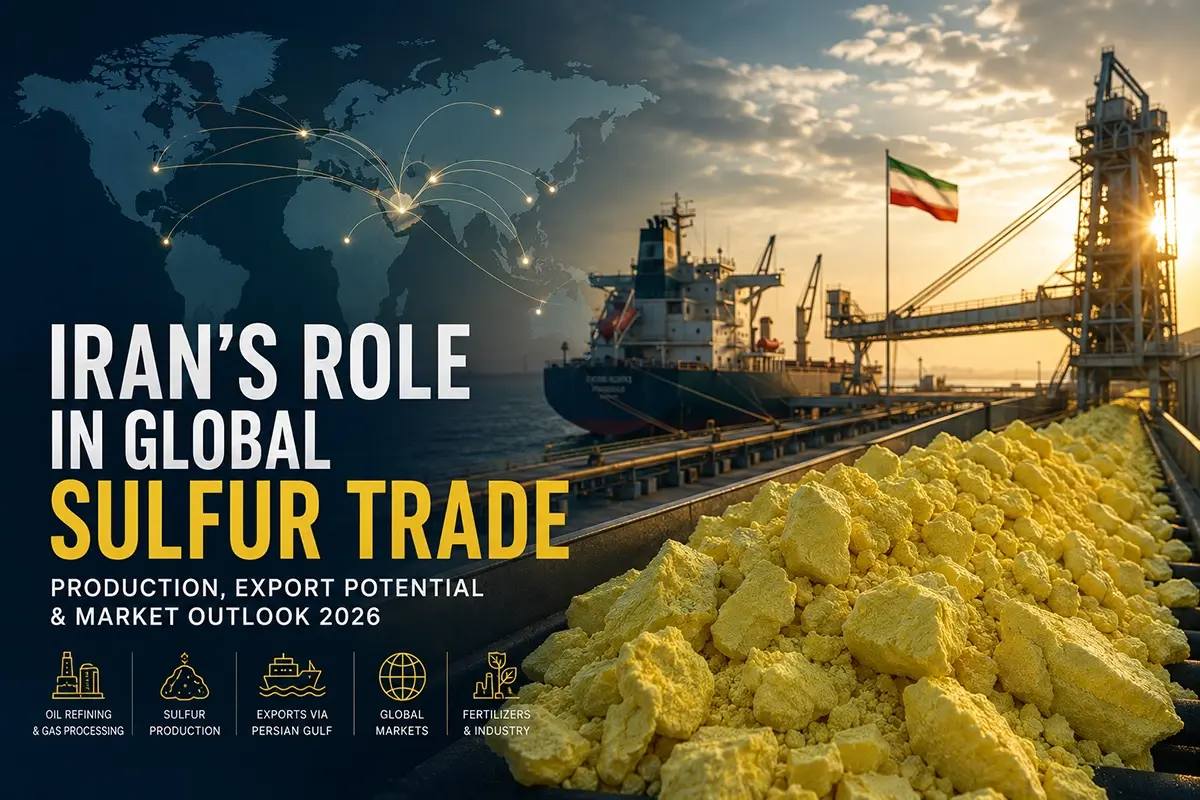
Editorial standard
Reviewed by AurexInsight Research
Last updated: June 30, 2026
AUREXINSIGHT RESEARCH
Iran's Role in Global Sulfur Trade: Production, Export Potential and Market Outlook 2026
An in-depth analysis of Iran's role in global sulfur trade, production capacity, export potential, downstream demand, infrastructure, and market outlook in 2026.
Executive summary
Iran is one of the world's important sulfur-producing countries thanks to its large oil refining and natural gas processing industries.
However, sulfur's importance extends beyond production volume alone.
Iran's position in global sulfur trade is shaped by refinery output, gas-processing capacity, proximity to major fertilizer markets, access to Persian Gulf shipping routes, and long-term export opportunities.
Research method and limitations
This summary is based on the full AurexInsight report, trade and industry data, and reputable public sources. Market data may be delayed, incomplete, or methodologically inconsistent; independent due diligence is essential before commercial decisions.
Written and reviewed by: AurexInsight Research
Full report and sources: https://aurexinsight.com/en/insights/irans-role-in-global-sulfur-trade-production-export-potential-market-outlook-2026
Research method
This analysis triangulates reputable public sources, trade and industry data, institutional reports, and consistency checks. Material source conflicts, limitations, and uncertainty are stated explicitly.
Data limitations
Trade and market data may be delayed, incomplete, or methodologically inconsistent. This report does not replace independent legal, financial, procurement, or commercial due diligence.
Quick Answer
Iran is one of the world's important sulfur-producing countries thanks to its large oil refining and natural gas processing industries.
However, sulfur's importance extends beyond production volume alone.
Iran's position in global sulfur trade is shaped by refinery output, gas-processing capacity, proximity to major fertilizer markets, access to Persian Gulf shipping routes, and long-term export opportunities.
For traders, fertilizer producers, mining companies, and industrial buyers, Iran represents an important regional sulfur supplier whose future market influence depends on production efficiency, logistics, infrastructure, and international trade connectivity.
In 2026, Iran's sulfur market should be evaluated through three major perspectives:
- sulfur production capacity
- export competitiveness
- downstream industrial demand
For a broader comparison of Iran with other major sulfur suppliers, see:
👉🏻 Top Sulfur Exporting Countries in 2026
Executive Summary
Sulfur is often overlooked compared with crude oil, natural gas, or LNG.
Yet it remains one of the world's most strategically important industrial commodities.
Global sulfur demand continues to matter because sulfur serves as an essential raw material for fertilizer production, sulfuric acid manufacturing, mining operations, chemical processing, and numerous industrial applications.
Unlike many commodities, sulfur is largely produced as a by-product of oil refining and natural gas processing.
Consequently, sulfur supply is closely linked to developments in the global energy industry.
Within this market, Iran occupies an important position.
Its extensive refining capacity, significant natural gas resources, and strategic location in the Persian Gulf make it an important participant in regional sulfur markets.
Although Iran is not the world's largest sulfur exporter, its production base and geographic advantages give it long-term strategic importance.
Understanding Iran's role therefore requires more than simply examining export volumes.
Market participants should evaluate:
- sulfur production
- refinery development
- gas-processing capacity
- downstream industries
- export logistics
- regional demand
- maritime accessibility
This report examines Iran's position in global sulfur trade, production potential, export opportunities, infrastructure, downstream industries, and the factors that buyers should monitor during 2026.
For broader sulfur-market context, readers may also explore:
👉🏻 Global Sulfur Market Outlook 2026
👉🏻 Top Sulfur Exporting Countries in 2026
👉🏻 Why Sulfur Matters in Global Fertilizer Markets
For a broader discussion of regional trade routes, see:
👉🏻 Why the Strait of Hormuz Matters for Global Commodity Trade in 2026
Key Takeaways
- Iran is an important sulfur producer due to its refining and gas-processing industries.
- Sulfur demand is closely connected to fertilizer, mining, and chemical industries.
- Export competitiveness depends on logistics, infrastructure, and market access rather than production alone.
- Persian Gulf shipping routes remain strategically important for sulfur exports.
- Downstream industrial demand continues supporting long-term sulfur consumption.
- Buyers should monitor refinery operations, freight markets, and fertilizer-sector developments together.
- Iran's role should be evaluated both independently and against the world's leading sulfur exporting countries.
Iran Sulfur Market Snapshot
| Factor | Market Relevance |
|---|---|
| Core Commodity | Sulfur |
| Primary Source | Oil Refining & Gas Processing |
| Current Export Position | Regional Supplier |
| Major Downstream Industry | Fertilizer |
| Strategic Region | Persian Gulf |
| Main Export Advantage | Geographic Position and Energy Infrastructure |
| Key Market Lens | Production vs Export Competitiveness |
Iran's importance in sulfur markets extends well beyond annual production statistics.
Its competitive position depends on how efficiently sulfur production can be integrated with refining operations, logistics, export infrastructure, and growing downstream demand.
Why Sulfur Matters in Global Commodity Markets
Sulfur rarely receives the same public attention as crude oil or LNG.
Nevertheless, it is indispensable to numerous industrial supply chains.
Global sulfur consumption supports industries such as:
- phosphate fertilizers
- sulfuric acid
- mining
- metallurgy
- chemicals
- batteries
- industrial processing
Because sulfur demand is tied directly to food production and industrial manufacturing, market participants closely monitor supply conditions.
Unlike commodities produced specifically for sale, sulfur is primarily recovered during the removal of sulfur compounds from crude oil and natural gas.
Consequently, sulfur production often reflects broader developments in refining activity and gas processing.
For a deeper understanding of sulfur's role in fertilizer markets, read:
👉🏻 Why Sulfur Matters in Global Fertilizer Markets
For a broader view of how natural gas markets influence fertilizer production, read:
👉🏻 How Natural Gas Prices Affect Urea Markets
Where Sulfur Comes From
Unlike metals that are extracted directly from mines, most commercial sulfur enters the market as a recovered by-product.
The largest sources include:
- crude oil refining
- natural gas processing
- sour gas treatment
- petrochemical operations
Environmental regulations requiring cleaner fuels have significantly increased sulfur recovery rates worldwide.
As refineries remove sulfur from petroleum products, the recovered sulfur becomes an important industrial feedstock rather than waste.
This relationship explains why developments in the energy sector often influence sulfur availability.
Countries with large refining and gas-processing industries naturally become important sulfur producers.
Iran is one of those countries.
Its combination of refining capacity and natural gas processing provides a substantial foundation for sulfur production.
For a comparison of countries with strong sulfur export positions, see:
👉🏻 Top Sulfur Exporting Countries in 2026
Iran's Sulfur Production Capacity
Iran is one of the Middle East's important sulfur-producing countries due to the scale of its oil refining and natural gas processing industries.
Unlike commodities that rely primarily on mining, sulfur production in Iran is closely associated with hydrocarbon processing.
As crude oil is refined and sour natural gas is treated, sulfur compounds are removed to meet environmental standards.
The recovered sulfur then becomes a valuable industrial commodity.
This creates an important relationship between:
- refinery throughput
- gas-processing activity
- environmental regulations
- sulfur availability
Consequently, fluctuations in refining operations may influence sulfur supply even when demand remains relatively stable.
For market participants, understanding this connection is essential when evaluating long-term sulfur availability.
Sulfur Value Chain
Sulfur follows a highly integrated industrial value chain before reaching its final applications.
Understanding this chain helps explain why sulfur markets are influenced by developments across the broader energy and industrial sectors.
| Stage | Purpose |
|---|---|
| Crude Oil & Natural Gas | Primary hydrocarbon source |
| Refining & Gas Processing | Sulfur recovery |
| Sulfur Handling & Storage | Preparation for transport |
| Export Logistics | Marine and land transportation |
| Sulfuric Acid Production | Primary downstream conversion |
| Industrial Applications | Fertilizers, mining, chemicals and metals |
Rather than existing as an isolated commodity market, sulfur is deeply connected to refining operations, international logistics, and downstream manufacturing.
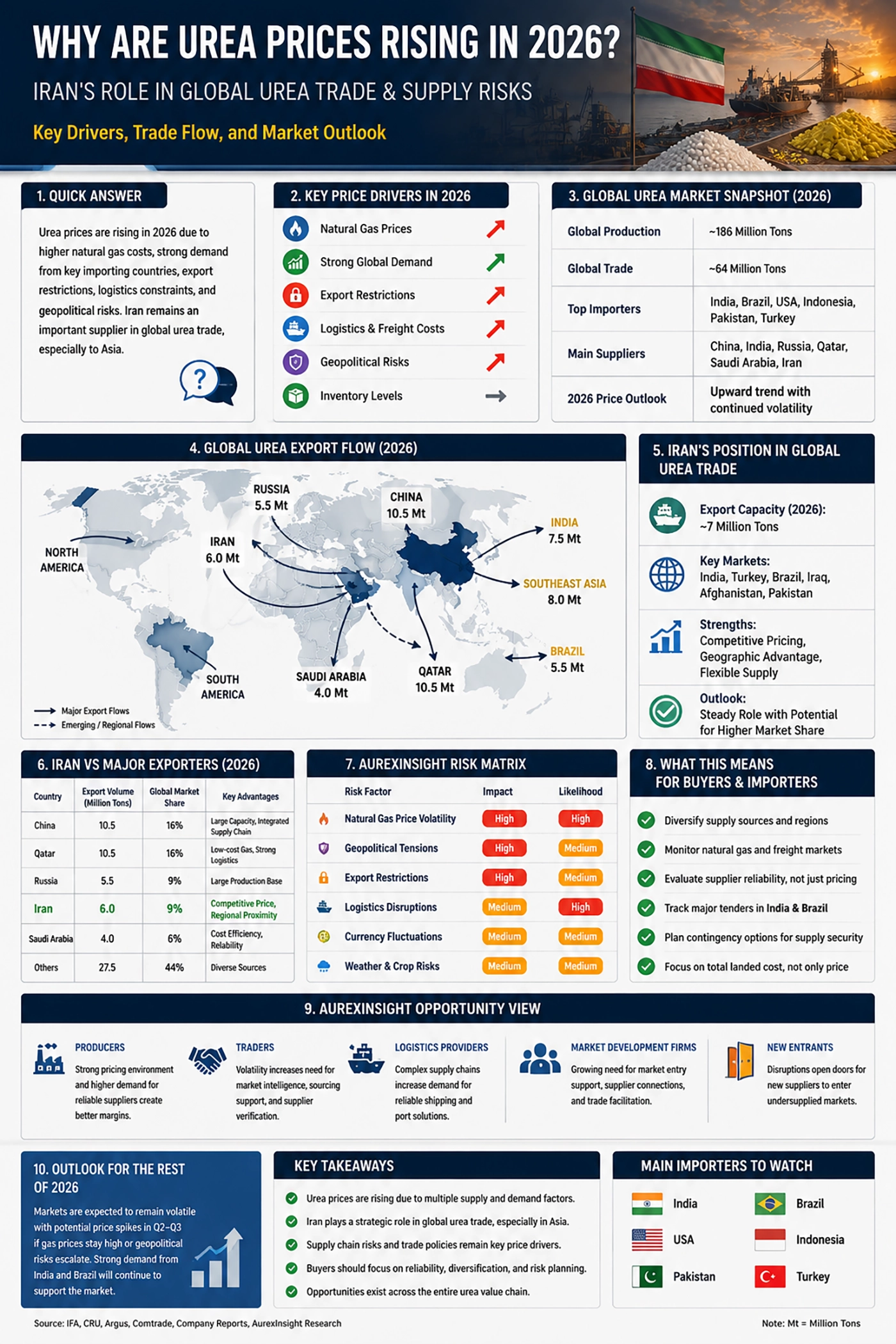
Figure 1. Overview of Iran's sulfur industry, illustrating sulfur recovery from oil and gas processing, the industrial value chain, export logistics through the Persian Gulf, downstream fertilizer production, and Iran's long-term role in global sulfur markets.
Major Global Sulfur Producers
Sulfur production is concentrated among countries with significant refining and natural gas-processing industries.
Leading producers include:
- China
- United States
- Saudi Arabia
- Canada
- Russia
- Kazakhstan
- United Arab Emirates
- Iran
Although production volumes differ considerably, these countries share an important characteristic.
Each possesses large-scale hydrocarbon infrastructure capable of continuously recovering sulfur from refining or gas-processing operations.
For buyers, production capacity alone is not the only indicator that matters.
Reliability of supply, export infrastructure, logistics performance, and downstream integration often play equally important roles.
For a country-by-country view of export competitiveness, readers may also explore:
👉🏻 Top Sulfur Exporting Countries in 2026
Where Iran Fits in the Global Sulfur Market
Iran occupies a distinctive position within the international sulfur market.
Its importance stems from the combination of:
- substantial refining capacity
- significant natural gas processing
- strategic geographic location
- access to Persian Gulf shipping routes
- proximity to major fertilizer-consuming regions
These characteristics provide Iran with long-term strategic relevance despite strong competition from larger global exporters.
From a Market Intelligence perspective, Iran's sulfur industry should be evaluated across three dimensions.
Production Strength
Iran benefits from an established hydrocarbon sector capable of producing considerable sulfur volumes as part of refining and gas-processing activities.
Export Readiness
Export competitiveness depends upon:
- storage facilities
- terminal infrastructure
- transportation efficiency
- shipping accessibility
- logistics reliability
Production alone does not determine export success.
This is why Iran should be assessed not only as a producer, but also against countries that have combined sulfur recovery with strong export systems:
👉🏻 Top Sulfur Exporting Countries in 2026
Market Accessibility
International sulfur trade also depends on:
- customer relationships
- freight conditions
- shipping routes
- regional demand
- commercial competitiveness
These factors collectively determine how effectively sulfur reaches international markets.
Why Sulfur Matters for Fertilizer Markets
Sulfur is one of the most important raw materials used in global fertilizer production.
The majority of recovered sulfur is converted into sulfuric acid, which is essential for manufacturing phosphate fertilizers.
Because agriculture depends heavily on fertilizer availability, sulfur demand is indirectly linked to global food production.
As fertilizer consumption grows, sulfur markets often experience corresponding increases in demand.
For this reason, fertilizer analysts closely monitor sulfur production alongside other agricultural inputs.
For a more detailed explanation of this connection, read:
👉🏻 Why Sulfur Matters in Global Fertilizer Markets
Readers interested in fertilizer-market fundamentals may also explore:
👉🏻 Global Urea Market Outlook 2026
👉🏻 Top Urea Exporting Countries in 2026
👉🏻 Why Iran Matters in Global Urea Trade
Sulfur and Sulfuric Acid
Only a relatively small proportion of sulfur is consumed directly.
Most sulfur is first converted into sulfuric acid, one of the world's highest-volume industrial chemicals.
Sulfuric acid supports numerous industries including:
- phosphate fertilizers
- metal processing
- mining
- battery manufacturing
- chemicals
- industrial processing
This explains why sulfur demand frequently mirrors broader industrial and agricultural activity rather than energy markets alone.
For a broader market-level view, see:
👉🏻 Global Sulfur Market Outlook 2026
Global Drivers of Sulfur Demand
Global sulfur demand is shaped by several interconnected industries rather than a single end market.
Although sulfur production is closely linked to oil refining and natural gas processing, its consumption depends primarily on industrial activity, agricultural output, and manufacturing growth.
As economies continue investing in food security, infrastructure, mining, and industrial production, sulfur remains an indispensable raw material.
The principal drivers of global sulfur demand include:
- phosphate fertilizer production
- sulfuric acid manufacturing
- mining operations
- non-ferrous metal processing
- chemical manufacturing
- battery materials
- industrial processing
Because these industries often grow simultaneously, sulfur demand tends to remain relatively resilient throughout commodity cycles.
Agriculture Continues to Drive Sulfur Consumption
Agriculture represents the largest downstream consumer of sulfur worldwide.
Most recovered sulfur is converted into sulfuric acid, which is then used in the production of phosphate fertilizers.
As global food demand increases, fertilizer consumption generally follows the same long-term direction.
Consequently, sulfur markets are closely connected to agricultural production rather than energy markets alone.
Important demand drivers include:
- population growth
- food security initiatives
- fertilizer application rates
- agricultural productivity
- cultivated land expansion
For commodity analysts, fertilizer demand often serves as one of the earliest indicators of future sulfur consumption.
For additional context, see:
👉🏻 Why Sulfur Matters in Global Fertilizer Markets
Mining Industry Demand
Mining is another major consumer of sulfuric acid.
Many mining operations rely on sulfuric acid during mineral extraction and processing.
Industries utilizing sulfuric acid include:
- copper mining
- nickel production
- uranium extraction
- rare earth processing
- lithium projects
As investment in electrification, renewable energy, and battery supply chains continues, mining activity may provide additional structural support for sulfur demand.
Chemical Manufacturing
Sulfur also supports a broad range of chemical industries.
Beyond fertilizer production, sulfur derivatives are used in manufacturing:
- detergents
- pigments
- industrial chemicals
- synthetic fibers
- pharmaceuticals
- specialty chemicals
Although these sectors consume smaller volumes than fertilizer producers, together they contribute significantly to global sulfur demand.
This diversification helps stabilize sulfur markets across different economic cycles.
Iran's Export Advantage
Iran's sulfur industry benefits from several structural advantages that extend well beyond production capacity.
Its location provides efficient access to major international shipping routes serving Asia, South Asia, East Africa, and parts of Europe.
Key competitive strengths include:
- proximity to Persian Gulf export terminals
- access to international maritime routes
- established refining infrastructure
- significant natural gas processing capacity
- geographic proximity to major fertilizer-importing regions
These advantages help reduce transportation distances for many export destinations while strengthening Iran's long-term position within regional sulfur trade.
However, geography alone is not enough.
Long-term export competitiveness also depends on reliable logistics, efficient terminal operations, supplier credibility, and consistent market access.
Readers interested in comparing Iran with other major exporters can also read:
👉🏻 Top Sulfur Exporting Countries in 2026
Persian Gulf Logistics and Export Connectivity
Logistics have become one of the most important determinants of sulfur competitiveness.
Even when production remains stable, inefficient transportation systems can significantly increase delivered costs.
Successful sulfur exports depend upon:
- export terminals
- bulk handling facilities
- storage capacity
- vessel availability
- freight markets
- port efficiency
Because sulfur is generally transported in bulk cargoes, logistics efficiency often determines commercial competitiveness.
Countries capable of integrating production with reliable export infrastructure typically enjoy stronger positions in international sulfur markets.
For broader context on maritime logistics and sulfur trade, readers may also explore:
👉🏻 Global Sulfur Market Outlook 2026
Why the Strait of Hormuz Matters
The Strait of Hormuz remains one of the world's most strategically important maritime corridors.
For sulfur exporters located in the Persian Gulf, this corridor provides direct access to international shipping routes connecting Asia, Europe, Africa, and other global markets.
Although sulfur receives less attention than crude oil or LNG, its exports rely on the same regional maritime infrastructure.
Consequently, market participants monitor:
- shipping accessibility
- freight availability
- insurance costs
- vessel traffic
- export-terminal operations
- regional logistics conditions
Changes affecting maritime transportation may influence sulfur trade long before production itself changes.
For a broader discussion of this critical trade corridor, see:
👉🏻 Why the Strait of Hormuz Matters for Global Commodity Trade in 2026
Freight Markets and Delivered Cost
Delivered sulfur prices are influenced by considerably more than production costs.
International buyers evaluate the total landed cost, which includes:
- sulfur price
- inland transportation
- port handling
- marine freight
- insurance
- destination logistics
As freight markets fluctuate, delivered costs may change even when sulfur production remains stable.
This explains why procurement teams closely monitor shipping conditions alongside commodity prices.
For buyers sourcing sulfur internationally, comparing freight exposure across producing regions is equally important:
👉🏻 Top Sulfur Exporting Countries in 2026
What International Buyers Monitor
Professional procurement teams rarely base purchasing decisions on price alone.
Instead, they continuously evaluate a broader set of commercial indicators.
Among the most important are:
Production
- refinery operating rates
- gas-processing activity
- sulfur recovery volumes
Logistics
- export-terminal performance
- vessel availability
- freight-market trends
- port congestion
Market Conditions
- fertilizer demand
- sulfuric acid production
- mining activity
- industrial manufacturing
Trade Environment
- shipping accessibility
- insurance costs
- regional logistics
- supplier reliability
Combining these indicators provides a more complete understanding of sulfur-market dynamics than production statistics alone.
For supplier benchmarking, readers may also find useful:
👉🏻 Top Sulfur Exporting Countries in 2026
AurexInsight Executive Insight
Iran's role in global sulfur trade should be viewed through a long-term strategic lens rather than annual export volumes alone.
Like many industrial commodities, sulfur competitiveness depends on far more than production capacity.
Successful participation in international sulfur markets increasingly requires the integration of:
- reliable refining operations
- efficient sulfur recovery
- export infrastructure
- logistics performance
- commercial competitiveness
- access to international shipping routes
From an AurexInsight perspective, future competitive advantage will belong to organizations capable of understanding not only where sulfur is produced, but also how efficiently it moves from production facilities to downstream industries.
Market Intelligence therefore becomes an essential component of procurement, supplier evaluation, and long-term sourcing strategy.
To build a complete understanding of sulfur markets, this report should be read alongside:
👉🏻 Global Sulfur Market Outlook 2026
👉🏻 Top Sulfur Exporting Countries in 2026
👉🏻 Why Sulfur Matters in Global Fertilizer Markets
What to Watch During the Remainder of 2026
Several indicators deserve close attention during the remainder of 2026.
Monitoring these developments together provides a more comprehensive understanding of sulfur-market dynamics than production data alone.
Energy Sector
- refinery operating rates
- natural gas processing activity
- sulfur recovery volumes
- downstream refinery investments
Fertilizer Markets
- phosphate fertilizer demand
- sulfuric acid production
- agricultural consumption
- seasonal fertilizer purchasing
Industrial Demand
- mining investment
- metals processing
- chemical manufacturing
- battery-material production
Trade & Logistics
- freight-market conditions
- export-terminal activity
- shipping accessibility
- insurance costs
- Strait of Hormuz developments
Together, these indicators provide valuable insight into both current market conditions and future sulfur demand.
Outlook for the Remainder of 2026
Global sulfur markets are expected to remain fundamentally supported throughout the remainder of 2026.
Demand from fertilizer production, mining, and industrial manufacturing is likely to continue underpinning long-term sulfur consumption.
For Iran, future competitiveness will depend not only on sulfur production but also on continued improvements in refining efficiency, logistics, export infrastructure, and commercial connectivity.
Although international competition remains strong, Iran's combination of hydrocarbon resources, refining capacity, and strategic location within the Persian Gulf is expected to preserve its long-term relevance in regional sulfur trade.
Organizations capable of combining production analysis with logistics intelligence and downstream market monitoring will be better positioned to identify emerging opportunities throughout the global sulfur market.
Frequently Asked Questions
Why is sulfur important in global trade?
Sulfur is an essential industrial commodity used primarily in sulfuric acid production, phosphate fertilizers, mining, chemical manufacturing, and numerous industrial processes.
Because these industries support agriculture and manufacturing worldwide, sulfur remains strategically important to international trade.
For a broader overview, see:
👉🏻 Global Sulfur Market Outlook 2026
Why is Iran important in global sulfur markets?
Iran benefits from significant oil refining and natural gas processing capacity, both of which generate recoverable sulfur.
Combined with its strategic location in the Persian Gulf, these advantages make Iran an important regional sulfur supplier.
Is Iran one of the world's leading sulfur exporters?
Iran is an important regional sulfur supplier with substantial production capacity.
However, export leadership depends not only on sulfur output but also on logistics efficiency, export infrastructure, customer access, and shipping competitiveness.
For a detailed comparison, see:
👉🏻 Top Sulfur Exporting Countries in 2026
Is sulfur produced through mining?
Only a relatively small share of global sulfur comes directly from mining.
Today, most commercial sulfur is recovered during crude oil refining and natural gas processing.
Which industries consume the most sulfur?
The largest consumers include:
- phosphate fertilizer production
- sulfuric acid manufacturing
- mining
- chemical processing
- metallurgy
- battery-material production
For a deeper explanation of sulfur demand, see:
👉🏻 Why Sulfur Matters in Global Fertilizer Markets
Why does the Strait of Hormuz matter for sulfur exports?
Many sulfur shipments originating in the Persian Gulf rely on maritime routes passing through the Strait of Hormuz.
Shipping accessibility, freight costs, insurance premiums, and port operations all influence export competitiveness.
What factors determine sulfur export competitiveness?
Export success depends upon several interconnected factors, including:
- production capacity
- sulfur recovery efficiency
- export infrastructure
- logistics performance
- freight costs
- customer relationships
- international market access
What should sulfur buyers monitor during 2026?
Professional buyers should monitor:
- refinery operating rates
- fertilizer demand
- sulfuric acid production
- freight markets
- shipping conditions
- export-terminal activity
- insurance costs
- supplier reliability
References
- International Energy Agency (IEA)
- U.S. Energy Information Administration (EIA)
- U.S. Geological Survey (USGS)
- International Fertilizer Association (IFA)
- The Sulphur Institute (TSI)
- UN Comtrade Database
- International Trade Centre (ITC) Trade Map
- World Bank – Commodity Markets Outlook
- Reuters Commodities
- World Trade Organization (WTO)
Related AurexInsight Research
-
Iran's Role in Global LNG Trade: Gas Resources, Export Potential and Market Outlook 2026
-
Why the Strait of Hormuz Matters for Global Commodity Trade in 2026
-
How Regional Tensions Are Reshaping Global Commodity Markets in 2026
About AurexInsight
AurexInsight is an independent Market Intelligence platform focused on international trade, commodity markets, supplier evaluation, trade-flow analysis, and opportunity development.
Our mission is to help buyers, producers, traders, and decision-makers transform market intelligence into trusted business opportunities through data-driven insights, practical market analysis, and strategic decision support.
Disclaimer
This report is provided for informational and market-intelligence purposes only.
It should not be considered investment, legal, financial, procurement, or commercial advice.
Commodity markets, infrastructure, logistics, and international trade conditions can evolve rapidly.
Readers should conduct independent research and professional due diligence before making commercial or investment decisions.
Written and reviewed by
AurexInsight Research
AurexInsight publishes market intelligence, supplier validation insights, trade-flow analysis and opportunity-focused research for international business decision-makers.
View profile and research standardsRelated Research
Continue exploring this market theme
These related insights help build a clearer view of the market context, supply-chain risks and commercial opportunities connected to this analysis.
Global Sulfur Market Outlook 2026: Prices, Supply Risks and Trade Flows
Where is the sulfur market heading in 2026? Explore price drivers, supply risks, fertilizer demand, trade flows, major exporters and the signals buyers should monitor.
Read insightMarket OutlookIran's Role in Global LNG Trade: Gas Resources, Export Potential and Market Outlook 2026
An analysis of Iran's role in global LNG trade, examining natural gas resources, export potential, infrastructure constraints, regional position, and market outlook in 2026.
Read insightMarket OutlookTop Sulfur Exporting Countries in 2026: Production, Trade Flows and Competitive Analysis
A market-intelligence analysis of the top sulfur exporting countries in 2026, covering production strength, export infrastructure, trade flows, competitive advantages, and buyer considerations.
Read insight